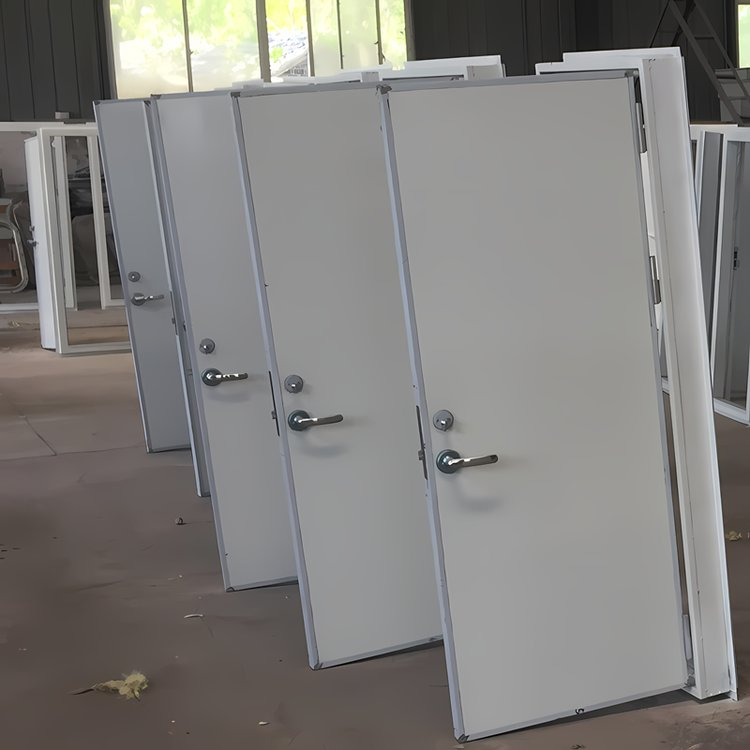
This question looks simple on the surface, but it actually touches on the core logic of building fire protection: “trading time for lives.” At first glance, the global mainstream fire door fire-resistance grading systems seem diverse and fragmented, but the underlying logic boils down to only three dimensions: Integrity, Insulation, and Smoke Control.
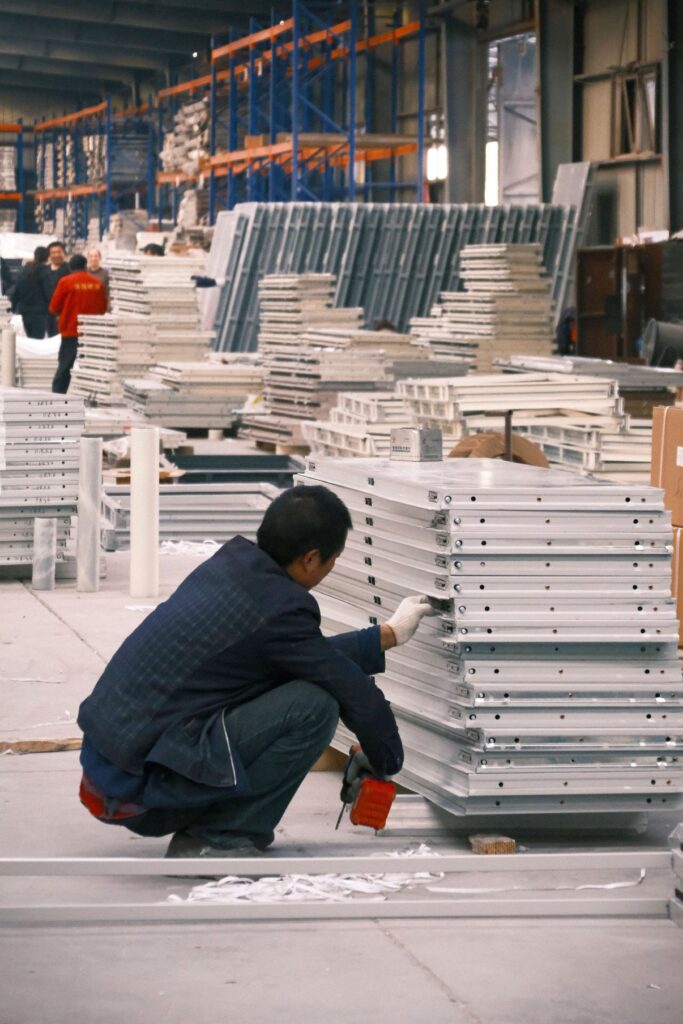
Below, I will break down each system one by one, aiming for the granularity of a Baidu Encyclopedia entry.
I. First, Clarify Three Core Concepts
Before comparing national standards, we must first speak the same language. All fire door classifications revolve around the following three performance indicators:
| Indicator | Code | Definition | Failure Criteria |
|---|---|---|---|
| Fire Integrity | E | Prevents flames and hot gases from penetrating | Sustained flame appears on the unexposed face, or the cotton pad is ignited |
| Fire Insulation | I | Limits temperature rise on the unexposed face | Average temperature rise on the unexposed face exceeds 140°C, or any single point exceeds 180°C |
| Smoke Control | S | Limits smoke leakage | Gas leakage exceeds the threshold under pressure differential (e.g., 3.0 cfm/ft² per UL 1784) |
Key Insight: “Longer fire resistance time” does not automatically mean “better.” An EI120 door means it satisfies both integrity and insulation simultaneously for 120 minutes; whereas certain systems (such as the traditional US UL standard) may only require integrity, with insulation only assessed for the first 30 minutes.
II. China System: GB 12955 — The Strictest Insulation Requirement
China’s current fire door standard is centered on GB 12955-2024 “Fire Doors”, with test methods referencing GB/T 7633 (equivalent adoption of the ISO 834 time-temperature curve).
2.1 Grading System
| Grade | Fire Resistance Rating | Core Application Scenarios |
|---|---|---|
| Class A (Jia) | ≥1.50h (90 minutes) | Fire walls, smoke-proof stairwells, critical equipment rooms |
| Class B (Yi) | ≥1.00h (60 minutes) | Evacuation corridors, anterooms, enclosed stairwells |
| Class C (Bing) | ≥0.50h (30 minutes) | Pipe shafts, cable shafts, secondary compartmentation |
2.2 Special Strict Points of the Chinese Standard
Compared to European and American standards, the Chinese standard is stricter on insulation requirements:
- Full-duration assessment: Classes A, B, and C all require that, throughout the entire fire resistance rating period, the temperature rise on the unexposed face does not exceed the critical value (140°C / 180°C).
- Hose stream test: A newly added requirement simulating post-fire impact from a fire hose to ensure the door remains structurally stable after the fire resistance test.
- No “temperature rise rating” compromise option: The US UL standard allows labeling with Temperature Rise Ratings of 250°F/450°F/650°F (assessing only the first 30 minutes), whereas China does not permit this “semi-insulated” compromise.
III. European System: EN 1634 + EN 13501-2 — E/I Dual Indicators in Parallel
The European system currently has the clearest logical framework globally. It uses EN 1634-1 as the test method, EN 13501-2 as the classification standard, and EN 16034 as the product standard.
3.1 E/I/S Classification Coding Rules
Europe uses a combination of letters and time markers, such as EI60, E30, EIS120:
| Marker | Meaning | Explanation |
|---|---|---|
| E | Integrity | Must be satisfied |
| I | Insulation | If omitted, only integrity is assessed |
| S | Smoke | Additional indicator; requires airtightness testing |
Common ratings:
- EI30 / EI60 / EI90 / EI120: Possess both integrity and insulation
- E30 / E60: Integrity only, no insulation requirement (e.g., certain pipe shaft doors)
- EIS60: Integrity + Insulation + Smoke control (commonly used in hospitals, data centers)
3.2 UK Transition: From BS 476 to EN Standards
The UK traditionally used BS 476-22, marked as FD30, FD60, FD90, FD120 (short for Fire Door). However, according to the latest building regulation amendments, the BS 476 series will be completely withdrawn after September 2, 2029, fully transitioning to EN standards.
Note: BS 476 testing does not include systematic smoke control. Therefore, FD-marked doors, if they are to satisfy current UK fire safety regulations regarding smoke control, usually require additional passage of smoke leakage testing per EN 1634-3 or BS EN 1634-1.
IV. North American System: UL + NFPA — Positive Pressure Testing and Temperature Rise Ratings
The North American system is centered on NFPA 80 (installation and maintenance standard), NFPA 252 (test method), and the UL 10 Series (UL 10B/10C/10D). The biggest differences from China and Europe lie in positive-pressure fire testing and Temperature Rise Ratings.
4.1 Time Ratings and Wall-Door Matching Logic
Common US fire door time ratings:
- 20 minutes, 45 minutes, 60 minutes, 90 minutes, 3 hours
North American building codes (such as IBC) follow a “75% Rule”: the fire door rating is typically 75% of the fire resistance rating of the wall in which it is installed. For example:
- 2-hour fire-rated wall → install a 90-minute (1.5-hour) fire door
- 4-hour fire-rated wall → install a 3-hour fire door
4.2 Temperature Rise Ratings
This is the most distinctive concept in the North American system. UL markings may include 250°F, 450°F, 650°F, or no marking:
- 250°F (approx. 121°C): Within the first 30 minutes, temperature rise on the unexposed face does not exceed 250°F. This is the highest insulation grade.
- 450°F (approx. 232°C): Medium insulation grade.
- 650°F (approx. 343°C): Basic insulation grade.
- No marking: Insulation not assessed, or temperature rise exceeds 650°F within 30 minutes.
Comparison: The Chinese GB standard does not allow this “insulation only for the first 30 minutes” compromise; it requires full-duration insulation. The UL standard argues that once occupant evacuation is complete (usually within 30 minutes), insulation requirements can be relaxed afterward, prioritizing structural integrity.
4.3 Smoke Control: “S” Marking and UL 1784
In corridors and smoke control zones, door assemblies must pass the UL 1784 air leakage test to earn the “S” marking (Smoke and Draft Control). Requirements:
- At ambient temperature (75°F) and elevated temperature (400°F), leakage rate must not exceed 3.0 cfm/ft² (cubic feet per minute per square foot) at a pressure differential of 0.10 inches of water column.
V. Australia/New Zealand System: AS 1905.1 — The Unique FRL Three-Segment Marking
The Australian standard AS 1905.1 references AS 1530.4 for test methods, adopting the globally unique FRL (Fire Resistance Level) three-segment marking:
FRL = Structural Adequacy / Integrity / Insulation
For example: – / 60 / 30
| Position | Meaning | Example Interpretation |
|---|---|---|
| First segment | Structural Adequacy | “-” indicates non-load-bearing element |
| Second segment | Integrity | 60 minutes |
| Third segment | Insulation | 30 minutes |
This means Australia allows integrity and insulation to be asynchronous. For example, a door with an FRL of -/60/30 means it can hold back fire for 60 minutes, but insulation is only guaranteed for 30 minutes. This is similar in logic to the US UL “Temperature Rise Rating,” but expressed more directly.
VI. Japan System: JIS A 1304 — Tied to the Building Standards Act
The Japanese fire door standard is centered on JIS A 1304 “Fire Doors”, with test methods referencing JIS A 1303 (equivalent to ISO 834).
6.1 Grading Characteristics
Japan’s Building Standards Act divides fire doors into:
- Fire doors: Fire resistance ratings typically 30 minutes or 60 minutes
- Specified fire protection equipment: Used for important evacuation routes, with stricter requirements for opening/closing durability and airtightness
The special feature of the Japanese system is its deep integration with the Building Standards Act:
- Fire resistance ratings directly correspond to building use (e.g., high-rise residences, hospitals, underground shopping streets)
- Extremely high durability requirements for hardware (opening/closing cycles typically required to exceed 100,000 times)
- Emphasis on routine maintenance inspections, linked to the fire safety inspection system
VII. Maritime / Special Fields: IMO FTP Code — The A60 Legend
In the ship and offshore platform sectors, fire doors follow the IMO FTP Code (International Maritime Organization Fire Test Procedures), using A, B, H classifications:
| Grade | Integrity | Insulation | Typical Applications |
|---|---|---|---|
| A-60 | 60 minutes | Unexposed face temperature rise ≤180°C | Engine rooms, control rooms, passenger ship bulkheads |
| A-30 | 30 minutes | Unexposed face temperature rise ≤180°C | Auxiliary compartment division |
| A-15 | 15 minutes | Unexposed face temperature rise ≤180°C | Low-risk areas |
| A-0 | 0 minutes (non-combustible material only) | None | Only requires non-combustible material |
| B-15 / B-0 | Similar to A-grade but reduced requirements | — | Secondary areas |
A60 is the “hard currency” in marine engineering. Its test curve also adopts the ISO 834 cellulose fire curve, but the assessment conditions are more stringent than land-based construction (must account for ship inclination, vibration, etc.).
VIII. Global Mainstream Systems Horizontal Comparison Summary Table
| Dimension | China GB | Europe EN | US UL/NFPA | Australia AS | Japan JIS |
|---|---|---|---|---|---|
| Core Standards | GB 12955, GB/T 7633 | EN 1634-1, EN 13501-2 | UL 10C, NFPA 252 | AS 1905.1, AS 1530.4 | JIS A 1304 |
| Time Ratings | 30/60/90 min (Class C/B/A) | EI30/60/90/120 | 20/45/60/90 min, 3 hours | -/30/60/90 | Primarily 30/60 min |
| Integrity Code | Implied in grade | E | Implied in time rating | Second segment number | Implied in grade |
| Insulation Code | Required throughout | I (can be omitted alone) | Temperature Rise (first 30 min only) | Third segment number | Required throughout |
| Smoke Control | No dedicated code | S (EIS) | “S” marking + UL 1784 | No dedicated code | No dedicated code |
| Test Pressure | Neutral pressure | Neutral pressure | Positive pressure (UL 10C) | Neutral pressure | Neutral pressure |
| Hose Stream Test | Yes | No | Yes (NFPA 252) | No | No |
IX. Engineering Selection Logic: Higher Is Not Always Better
Think EI120 or 3 hours sounds impressive? Wrong selection can waste money and violate codes.
Core Principle: Door-Wall Matching + Occupant Evacuation Time + Risk Level
- Match the wall: The US 75% rule and Europe’s door-wall coordinated design both aim to prevent the door from becoming the weak link in a fire wall.
- Evacuation time: 30 minutes is usually sufficient for residential buildings (EI30 / Class C); hospitals and nursing homes require 60–90 minutes (EI60 / Class B and above).
- Smoke priority: In high-rise buildings, smoke kills far more people than flames. Therefore, doors with an “S” marking or EIS are often more important than simply having a higher time rating.
- Insulation compromise: Equipment rooms and pipe shafts can use integrity-only (E) doors; areas with personnel traffic must use insulated (EI) doors.
X. Conclusion
Global fire door grading systems may seem complex, but the underlying logic is unified: using standardized time to buy standardized chances of survival. China’s GB is the strictest in full-duration insulation; Europe’s EN is the clearest in E/I/S separation; the US UL is the most distinctive in positive pressure and temperature rise; Australia’s AS is the most unique in its FRL three-segment format.
If you are a designer, remember: check which standard the AHJ (Authority Having Jurisdiction) for your project location recognizes, because the Dubai Civil Defence, Singapore SCDF, and Malaysia BOMBA each have their own local acceptance lists—having a CE or UL mark does not mean it works everywhere.
That’s all.
If you found this useful, please give it a like. Fellow professionals, feel free to add local details from your countries in the comments.