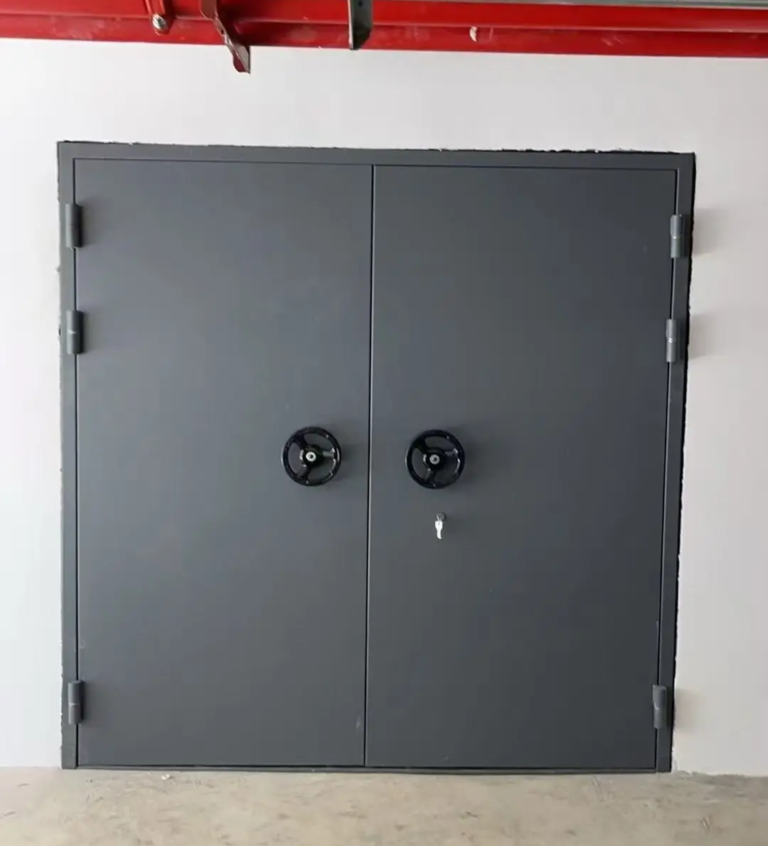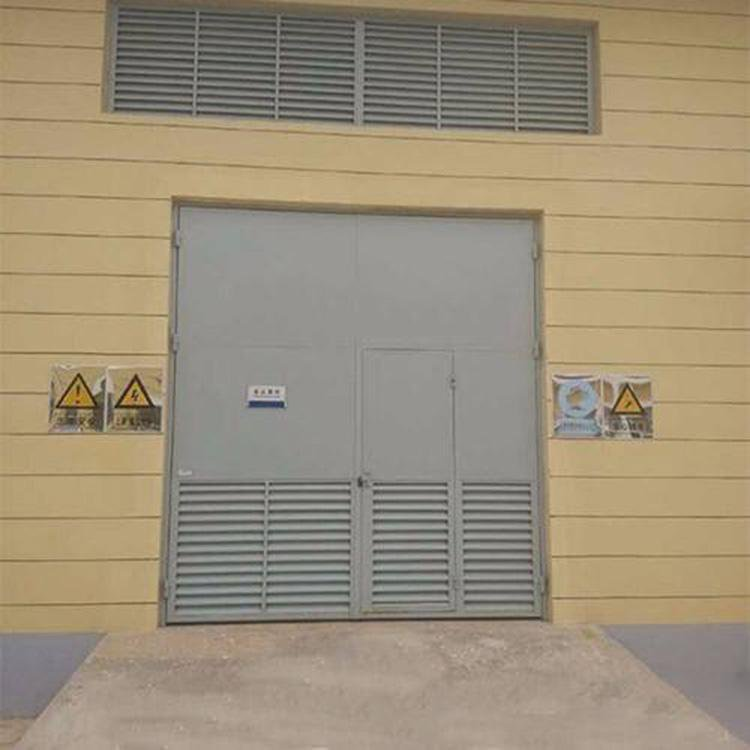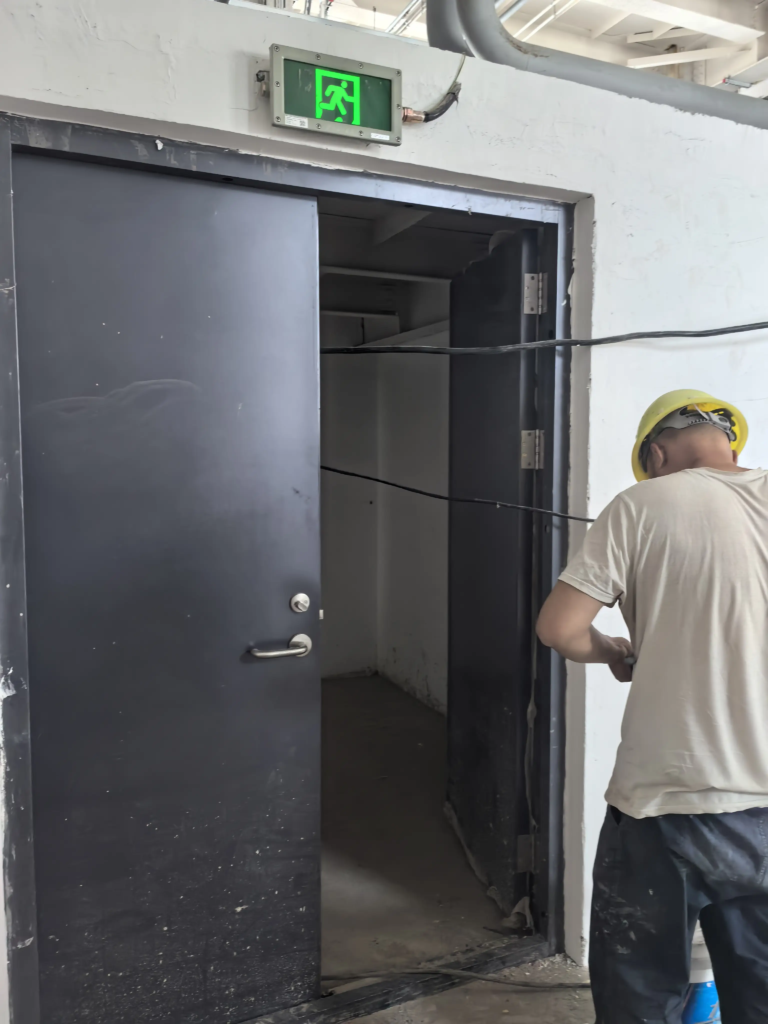
An intumescent fire seal (Intumescent Fire Seal / Intumescent Strip) is a functional fire-protection component installed in the gap between the door leaf and frame of a fire-rated door. At ambient temperature it remains flexible or rigid, not affecting normal door operation; when the ambient temperature rises to its activation threshold (typically 150 °C–200 °C), the internal intumescent material rapidly foams and carbonizes, expanding several to several tens of times in volume to fill the door gap and form a dense thermally insulating layer. This prevents the penetration of flame, high-temperature smoke, and toxic gases, and is the key passive fire-protection element for maintaining the fire integrity (E) of a fire door.
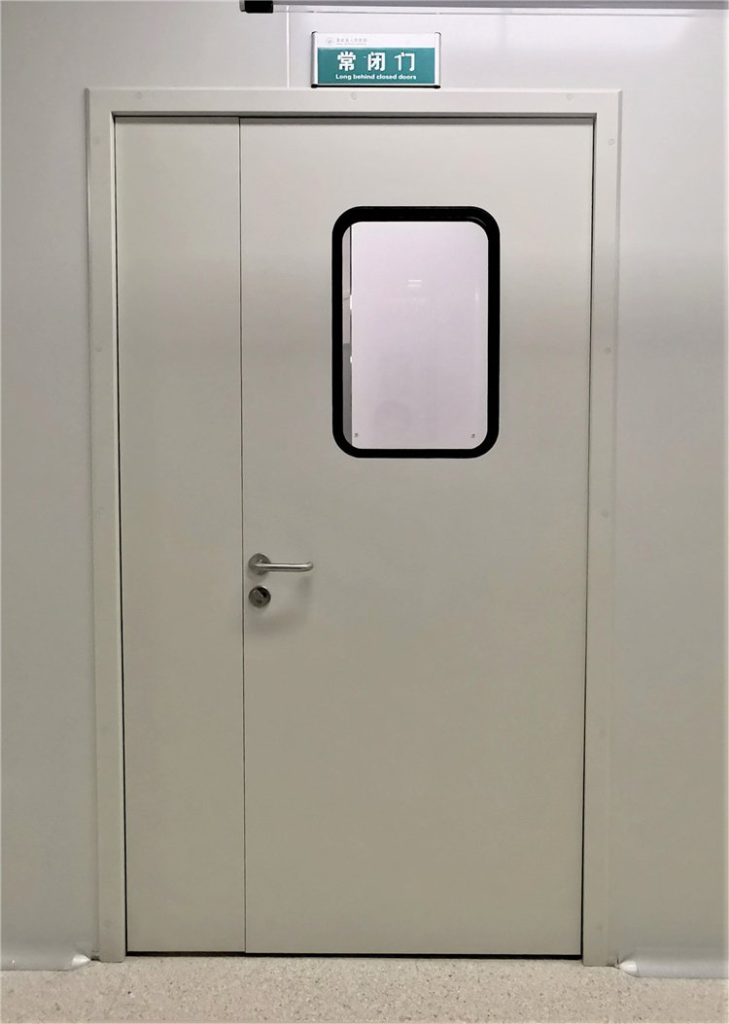
1. Is an Intumescent Seal Mandatory for Fire Doors?
Chinese Standard (GB)
According to GB 12955-2024 Fire Doors (implemented in 2024, superseding GB 12955-2008), fire doors must have fire-resistant intumescent seals embedded at the rebate overlap between the door leaf and frame, and these seals must satisfy the technical requirements of GB 16807 Fire-resistant Intumescent Seals. Fire doors not equipped with qualified seals cannot pass the fire integrity test, nor can they obtain CCC (China Compulsory Certification).
Key requirements of GB 12955-2024:
- Groove depth must exceed 1.2 times the seal thickness
- Joint gap between adjacent seals must be ≤ 1 mm
- Post-expansion fill rate must reach ≥ 95% of the gap cross-section
International Standards (BS / EN / UL / NFPA)
| Standard System | Seal Requirement | Core Logic |
|---|---|---|
| BS 476-22 | Must be tested as part of the complete doorset | Passing the test is deemed proper configuration; expansion ratio is not separately prescribed |
| EN 1634-1 | Seal must maintain integrity under positive-pressure conditions, preventing flame and high-temperature gas penetration | Emphasizes the “E” (Integrity) indicator; expanded seal must resist 20 Pa positive pressure |
| UL 10C | Positive-pressure fire door assembly test; seal is part of the holistic certification | Divided into Category A (seal built into door leaf edge) and Category B (seal applied externally to frame or leaf) |
| NFPA 80 | Regulates fire door installation, maintenance, and gap control | Explicitly states that excessive gaps or missing seals constitute a violation |
Key distinction: Chinese GB has a standalone mandatory product standard for seals (GB 16807), whereas the BS/EN/UL systems generally manage seals as integral parts of the doorset in whole-assembly testing, without issuing separate seal certifications.
2. Expansion Ratio Under Fire Exposure
The expansion ratio is not “the higher the better”; it must match the door gap, seal cross-section dimensions, and fire rating.
Chinese Standard Indicators
| Indicator | Requirement | Remarks |
|---|---|---|
| Expansion ratio | ≥ 300% (i.e., expanded volume is at least 3× the original) | Mandatory per GB 12955-2024 |
| Post-weathering ratio | Not less than 90% of the initial expansion ratio | New requirement in GB 16807-2025, covering tests after air aging, water immersion, acid/alkali exposure, and freeze-thaw cycles |
| Test conditions | 300 °C ± 5 °C constant temperature for 30 minutes | GB 16807-2025 employs a constant-weight loading device to ensure temperature stability |
Common Materials and Expansion Ratios in International Markets
| Material Type | Initial Expansion Temperature | Expansion Ratio | Characteristics |
|---|---|---|---|
| Expandable Graphite | 150 °C–200 °C | 10–70× | Market mainstream; high expansion pressure; multi-directional expansion; suitable for high fire-rated doors |
| Sodium Silicate | 100 °C–150 °C | 5–10× | Low expansion temperature; forms rigid foam; good thermal insulation; commonly used for FD30/FD60 doors |
| Monoammonium Phosphate (MAP) | Relatively low | High volume, low pressure | Mostly used for small-gap protection around hardware (locks, hinges) |
Common commercial product specifications: cross-sections of 10×4 mm, 15×4 mm, 20×4 mm, etc.; expansion ratios are customized according to cross-section size and substrate formulation.
3. Comparison of Major Standard Systems
| Comparison Dimension | Chinese GB | British BS 476-22 | European EN 1634-1 | U.S. UL 10C |
|---|---|---|---|---|
| Test pressure environment | Per GB/T 9978.1, essentially neutral pressure | Neutral pressure | Positive pressure, with top ≥ 20 Pa | Positive pressure, simulating real fire pressure |
| Neutral pressure plane (NPP) position | Approx. 500 mm (close to EN) | Approx. 1000 mm | Approx. 500 mm | Approx. 40 in. (~1000 mm); below is negative zone, above is positive zone |
| Seal certification method | Standalone product certification (GB 16807) | Part of whole-doorset testing | Part of whole-doorset testing | Part of whole-doorset testing |
| Expansion ratio prescription | Directly mandates ≥ 300% | Not directly prescribed; verified by test | Not directly prescribed; verified by test | Not directly prescribed; verified by test |
| Door gap requirement | GB 50877-2014: gap ≤ 3 mm | 3–4 mm (side and top gaps) | ≤ 4 mm (typically 3 mm) | ≤ 1/8 in. (~3.2 mm) |
| Threshold gap | Fire door ≤ 10 mm; smoke door ≤ 3 mm | Fire door ~10 mm; smoke door ≤ 3 mm | Smoke door must use drop seal | Per NFPA 80, typically ≤ 3/4 in. (requires coordinated sealing) |
4. Rationale and Technical Difference Analysis of Different Standards
4.1 BS 476-22: Historical Legacy of the Commonwealth System
- Rationale: The BS 476 series originated from the UK’s mid-20th-century building fire test system and is still used in Commonwealth countries and some Middle Eastern and Southeast Asian markets.
- Technical characteristic: Employs a neutral pressure plane (NPP) at approximately 1000 mm height, meaning the upper half of the door leaf is in a relatively low-pressure zone with limited hot-gas outward pressure.
- Impact on seals: Test conditions are relatively moderate; seals only need to expand and fill gaps under moderate pressure to maintain integrity. Therefore, traditional BS-rated doors impose lower expansion-pressure requirements on seals than European and U.S. standards.
4.2 EN 1634-1: The Positive-Pressure Revolution of the EU Single Market
- Rationale: To unify the building product markets of EU member states, EN 1634-1 replaced fragmented national standards and is linked to the CPR (Construction Products Regulation), requiring CE marking.
- Technical characteristic: Lowers the neutral pressure plane to 500 mm and requires the door leaf top to maintain at least 20 Pa positive pressure. This places the entire upper half of the door leaf in the positive-pressure zone, where hot gases are actively pushed toward gaps.
- Impact on seals: Seals must expand and form a dense carbonized layer under a higher pressure gradient; otherwise flame or hot gases will rapidly penetrate the gap, causing cotton pad ignition failure. Therefore, EN-rated doors typically require high-expansion-pressure, multi-directional expandable graphite seals.
4.3 UL 10C: The Mandatory U.S. Shift to Positive-Pressure Testing
- Rationale: In 1997, the U.S. Uniform Building Code (UBC) introduced Section 7-2, requiring fire doors to be tested under positive-pressure conditions to more realistically simulate the pressure environment caused by thermal expansion in real fires. The previously widely used UL 10B was a neutral-pressure test.
- Technical characteristic: UL 10C establishes positive pressure in the furnace, with the upper half of the door leaf subjected to significant outward pressure. WDMA (Window & Door Manufacturers Association) accordingly classifies fire doors into:
- Category A: Seal built into the door leaf edge (concealed), factory-installed, no on-site addition required.
- Category B: Seal must be applied externally to the frame or leaf surface, requiring on-site coordinated installation.
- Impact on seals: Positive-pressure testing substantially raised the performance threshold for seals, directly catalyzing the widespread adoption of “expandable graphite + high expansion pressure” formulations. At the same time, UL 10C requires seals to be tested and certified together with the same manufacturer and same doorset; on-site replacement with a different brand of seal will invalidate the certification.
4.4 Evolution Logic of Chinese GB
- GB 12955-2008 → GB 12955-2024: The 2008 edition mainly referenced then-current international practices; the 2024 edition clearly absorbed the positive-pressure concepts of EN 1634-1 and UL 10C, imposing more quantified requirements on seal expansion ratio, weather resistance, and installation precision.
- Reason for standalone GB 16807: China’s fire product regulatory system emphasizes “independent certification of critical components.” As a replaceable wear part, seals must separately pass GB 16807 testing to ensure that even when the whole doorset is qualified, there is a basis for compliance when replacing seals. This differs institutionally from the European and American “whole-doorset certification” approach.
5. Installation Specifications
General Requirements (Cross-Standard Commonalities)
- Continuity: Seals must be continuously embedded along both sides and the top of the door leaf without interruption (hardware locations must be compensated with dedicated intumescent pads).
- Position: Preferably embedded in the frame rebate (rebate groove) rather than the leaf edge, to avoid daily impact causing detachment.
- Gap control: Side and top gaps are typically controlled at 3–4 mm; when exceeding 4 mm, most standards consider that intumescent seals cannot effectively seal within the critical first 5 minutes.
Chinese-Specific Requirements (GB 12955-2024)
- Groove depth > seal thickness × 1.2
- Joint gap ≤ 1 mm
- Post-expansion cross-section fill rate ≥ 95%
- Strictly prohibit loosening, protrusion, or paint coverage (paint will block expansion)
Common Pitfalls in European and American Projects
- Paint coverage: On-site painting over the intumescent strip is the most common acceptance failure in UL 10C and EN 1634-1 projects; hardened paint will prevent seal expansion.
- Excessive gaps: Floor replacement leading to increased threshold gaps, without simultaneous replacement of the drop seal (automatic drop seal), directly violates smoke-control requirements under UL 1784 or BS 476-31.1.
- Unauthorized replacement: Replacing a damaged seal with a non-original brand is considered a certification-invalidating act under the UL/EN systems.
6. Related Standards Index
| Standard No. | Standard Title | Scope of Application |
|---|---|---|
| GB 12955-2024 | Fire Doors | Chinese general technical requirements for fire door products |
| GB 16807-2025 | Fire-resistant Intumescent Seals | Chinese standalone product standard for intumescent seals |
| GB/T 9978.1 | Fire-Resistance Tests — Elements of Building Construction | Chinese general fire resistance test methods |
| BS 476-22 | Fire Tests on Building Materials and Structures — Part 22: Methods for Determination of the Fire Resistance of Non-Loadbearing Elements | British and Commonwealth systems |
| EN 1634-1 | Fire Resistance and Smoke Control Tests for Door and Shutter Assemblies — Part 1: Fire Resistance Test for Doorsets | European and mainstream Middle Eastern projects |
| EN 13501-2 | Fire Classification of Construction Products and Building Elements — Part 2: Classification Using Data from Fire Resistance Tests | European fire classification supporting standard |
| UL 10C | Positive Pressure Fire Tests of Door Assemblies | U.S. and consultant-specified projects |
| NFPA 252 | Standard Methods of Fire Tests of Door Assemblies | U.S. standard test methods |
| NFPA 80 | Standard for Fire Doors and Other Opening Protectives | U.S. fire door installation and maintenance |
| UL 1784 | Air Leakage Tests of Door Assemblies and Other Opening Protectives | U.S. smoke door (S-label) certification |
Summary: It is a consensus across all mainstream standard systems that fire doors must be equipped with intumescent fire seals. Regarding expansion ratio, Chinese GB 12955-2024 directly mandates ≥ 300%, whereas the BS/EN/UL systems do not directly prescribe a specific ratio; instead, they indirectly verify seal expansion performance through whole-doorset positive-pressure fire resistance testing. The differences in pressure requirements for seals among standards essentially stem from the divergence in neutral pressure plane position and positive-pressure vs. neutral-pressure test environments — BS 476-22 is relatively moderate, while EN 1634-1 and UL 10C are more stringent. Export enterprises must select matching seal substrates (graphite vs. sodium silicate) and cross-section specifications according to the target market’s testing system, and ensure that seals are tested and certified together with the doorset, avoiding on-site replacement that leads to compliance invalidation.